
THINKING / 2026
The New Standard of Hospitality: Why Brand Experience Matters in Ubud
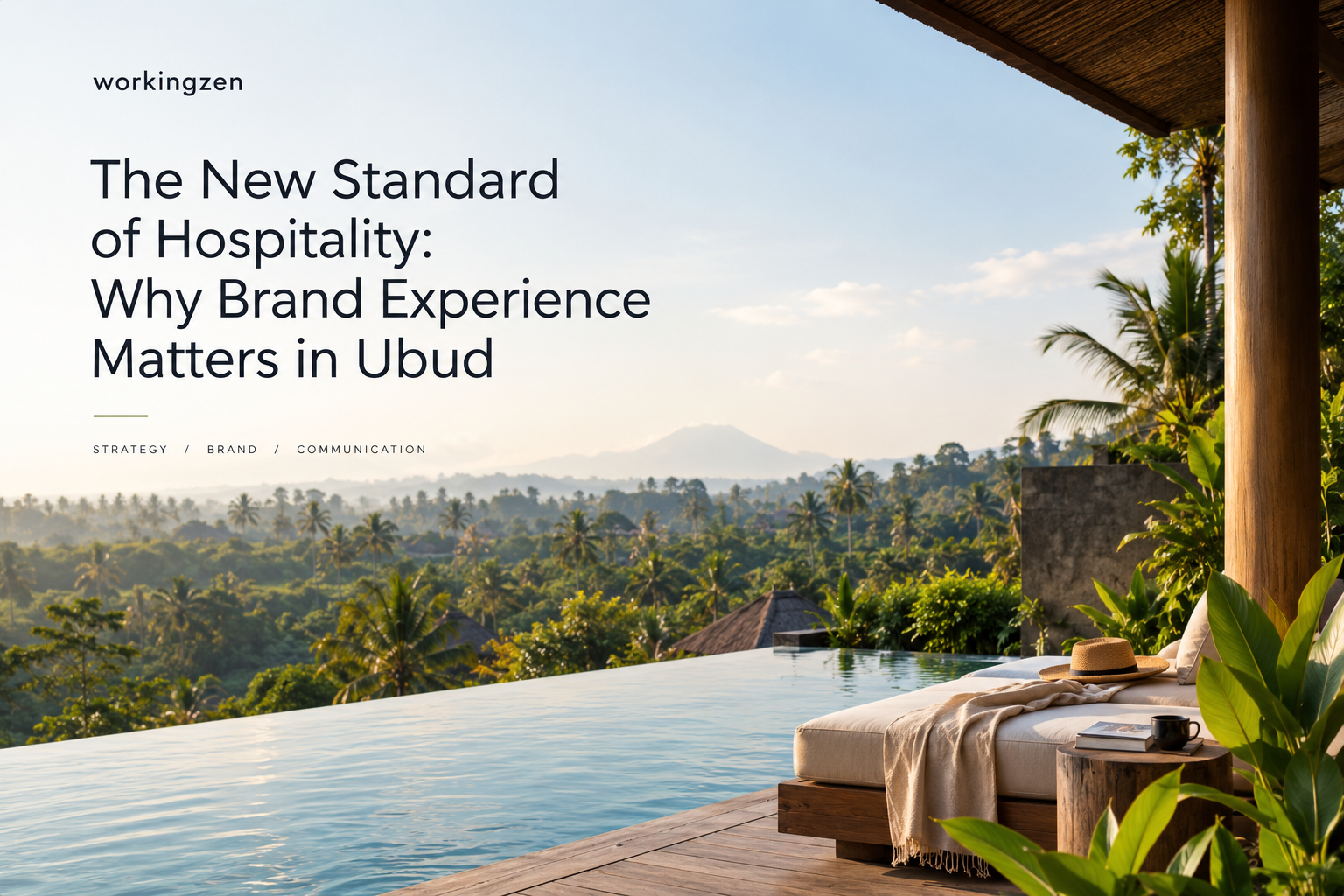
The New Standard of Hospitality: Why Brand Experience Matters in Ubud
Hospitality is no longer defined only by beautiful rooms, excellent service, or a convenient location. Today, guests increasingly look for something more meaningful: an experience that feels authentic, memorable, and connected to the destination.
This shift is particularly visible in places such as Ubud, Bali, where accommodation is deeply connected to culture, nature, wellness, creativity, and the slower rhythm of island life.
For hospitality brands, this creates an interesting challenge. How do you create an experience that stands out without losing the authenticity that makes the destination special?
Beyond the Traditional Definition of Hospitality
The hospitality industry has evolved significantly over the past decade.
Guests are no longer simply comparing room sizes, facilities, and prices. Before making a booking, they may discover a property through Instagram, Google, travel platforms, videos, reviews, or recommendations from creators.
The experience starts long before they arrive.
A property’s visual identity, website, photography, social media presence, tone of communication, and even the way its story is presented can influence how potential guests perceive the brand.
In other words, hospitality has become an experience that exists both offline and online.
Why Ubud Is Different
Ubud has developed a distinct identity within Bali’s tourism landscape.
It is associated with art, culture, greenery, wellness, creativity, and a more immersive way of experiencing Bali. Because of this, hospitality brands operating in Ubud need to communicate more than accommodation.
They need to communicate a sense of place.
A successful hospitality brand should make potential guests understand not only where they will stay, but also how it will feel to be there.
This is where brand development and strategic communication become important.
Creating a Consistent Brand Experience
A strong hospitality brand does not rely on a single beautiful photograph or an attractive logo.
The brand experience should feel consistent across every touchpoint.
That can include:
- Website design and user experience
- Photography and visual direction
- Social media content
- Brand storytelling
- Digital campaigns
- Guest communication
- On-site experience
- Partnerships and collaborations
When these elements work together, they create a stronger perception of the property and help guests understand what makes it different.
This is especially important in a destination such as Ubud, where travelers have countless accommodation options.
The Role of Storytelling
One of the most effective ways for hospitality brands to differentiate themselves is through storytelling.
Instead of simply saying that a property has beautiful rooms, a swimming pool, or a strategic location, storytelling can communicate the feeling behind the experience.
What makes the property unique?
What kind of traveler does it attract?
What does the surrounding environment contribute to the experience?
What makes staying there different from staying somewhere else?
These questions allow a hospitality brand to move from simply selling rooms to communicating an experience.
For example, properties such as Wada Riu Ubud can become part of a broader Ubud hospitality story—one where accommodation is connected to the character and atmosphere of the destination itself.
Digital Presence Is Part of the Guest Experience
For many travelers, the first interaction with a hospitality brand happens through a screen.
This makes digital presence an important part of the overall guest journey.
A website should communicate the brand clearly while making it easy for visitors to discover rooms, experiences, locations, and booking information.
Social media, meanwhile, can provide a more dynamic way to communicate the atmosphere of the property.
The objective is not simply to publish more content.
It is to create the right content, with the right visual language, message, and consistency.
From Marketing to Experience Design
Modern hospitality marketing is increasingly moving beyond traditional advertising.
Instead of asking only:
“How can we get more bookings?”
brands can also ask:
“How can we create an experience people want to discover, remember, and share?”
This change in perspective can influence everything from content creation and campaign strategy to photography, partnerships, and guest communication.
It also creates opportunities for hospitality businesses to build stronger emotional connections with their audiences.
Building Hospitality Brands for the Future
The future of hospitality will continue to be shaped by changing traveler expectations and increasingly competitive digital environments.
Properties that understand their identity, communicate their story clearly, and create consistency between their digital and physical experiences will have more opportunities to build meaningful relationships with their audiences.
At workingzen, we believe that strong brands are built through the combination of strategy, creativity, communication, and execution.
For hospitality and lifestyle businesses, this means creating more than attractive marketing materials. It means developing a brand experience that communicates who you are and why people should care.
Because ultimately, the strongest hospitality brands are not simply remembered for where people stayed.
They are remembered for how the experience made them feel.