
THINKING / 2026
Experiential Hospitality: Designing Places That Feel Like an Escape
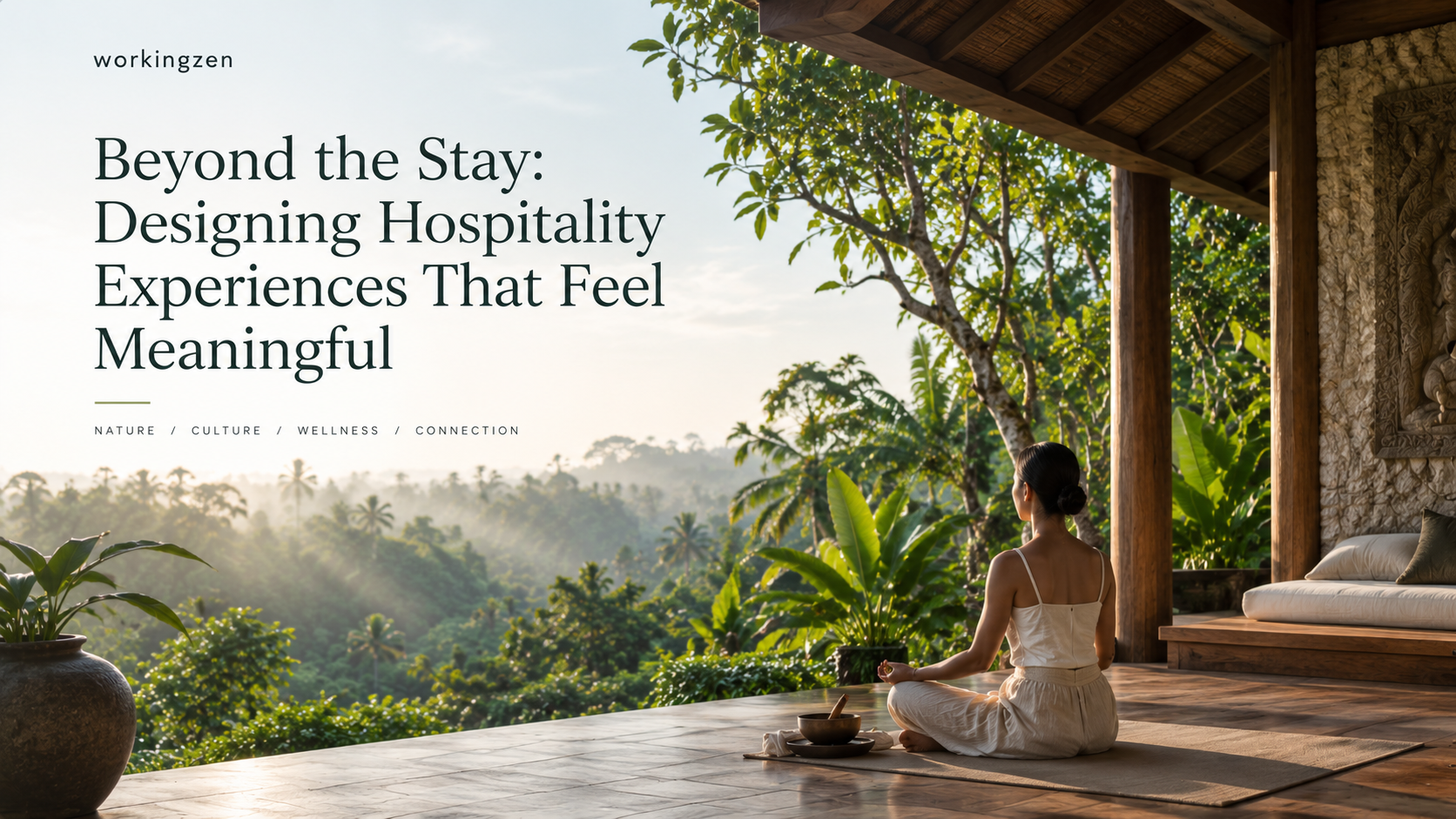
Beyond the Stay: Designing Hospitality Experiences That Feel Meaningful
Hospitality has changed.
A beautiful room, a well-designed lobby, and attentive service remain important, but today’s hospitality experience extends far beyond the physical stay. Travelers increasingly look for places that offer a sense of connection — with nature, culture, the destination, and ultimately themselves.
This is where experiential hospitality becomes increasingly relevant.
Rather than simply providing accommodation, hospitality brands can create environments that encourage guests to slow down, explore, reconnect, and experience a destination in a more meaningful way.
More Than a Place to Stay
The traditional hospitality model often focuses on functional elements: a comfortable room, convenient facilities, good service, and a desirable location.
Experiential hospitality takes a broader perspective.
It asks:
What should a guest feel when they are here?
That question can influence everything from architecture and interiors to food, wellness, activities, communication, and even the way a property interacts with its surrounding environment.
The result is a more holistic guest experience where individual touchpoints become part of one larger story.
Designing With a Sense of Place
One of the strongest opportunities for hospitality brands is to embrace the character of their destination.
In Ubud, for example, the landscape itself can become part of the experience.
Tropical forests, traditional architecture, local craftsmanship, Balinese culture, wellness traditions, and the slower rhythm of village life all contribute to the identity of the destination.
A hospitality property does not necessarily need to compete with these elements.
Instead, it can create an experience that allows guests to become more connected to them.
This approach can be seen in properties such as MayuraUbud, where the concept combines a tropical setting with natural materials, Balinese-inspired design, wellness experiences, cultural activities, and a slower approach to hospitality.
The Power of Quiet
Modern travel can often feel highly optimized.
There are itineraries to follow, destinations to photograph, restaurants to visit, and experiences to collect.
Hospitality brands have an opportunity to offer something different: space to pause.
Quiet can become part of the experience.
A shaded garden, a view into the surrounding landscape, a slow breakfast, a wellness ritual, or simply a comfortable place to sit without an agenda can become meaningful moments in a guest’s journey.
These moments may appear simple, but they can become some of the most memorable parts of a stay.
Wellness as an Experience, Not a Facility
Wellness hospitality is also evolving.
A spa or yoga studio can certainly be part of a wellness offering, but a deeper approach considers wellness as an atmosphere that extends throughout the guest journey.
Lighting, materials, sound, food, movement, nature, and daily rituals can all contribute to how a guest experiences a property.
Mayura Ubud, for instance, presents wellness through experiences including yoga, meditation, spa treatments, and mindful activities inspired by the natural and cultural environment of Ubud.
This demonstrates an important shift: wellness does not have to be an isolated service. It can become part of the brand experience itself.
Storytelling Through Every Touchpoint
A strong hospitality concept also needs a strong story.
But storytelling does not necessarily mean filling a website with words.
A brand can tell its story through:
- Architecture
- Interior design
- Photography
- Food and beverage
- Guest experiences
- Local partnerships
- Social media
- Website design
- Service rituals
- Brand language
When these elements communicate the same idea, the brand becomes easier to recognize and remember.
The experience becomes the story.
From Hospitality Brand to Hospitality Experience
This is perhaps the biggest shift taking place in modern hospitality.
Guests are not only choosing where they will sleep.
They are choosing how they want to experience a destination.
For hospitality brands, this creates an opportunity to think beyond conventional marketing.
Instead of asking only how to promote a property, brands can ask:
What makes the experience worth remembering?
What makes it connected to its destination?
What feeling should guests take home with them?
These questions can lead to stronger concepts, clearer communication, and more meaningful brand experiences.
Designing With Purpose
At workingzen, we believe that meaningful experiences begin with clarity.
Strategy defines the direction.
Creativity gives it character.
Communication makes it relevant.
Execution brings the idea to life.
For hospitality and lifestyle brands, this means looking beyond individual campaigns or marketing assets and considering how every touchpoint contributes to the overall experience.
Because in hospitality, the strongest brands are often not the ones that simply provide a place to stay.
They are the ones that create a place people remember.